
If you’re searching for the Best Top Coat for Epoxy Resin, I’m curious about finishes that give epoxy resin a lasting shine, and I think the key is a smooth, durable finish you can trust.
I’ve found that a coat with a quick 15-minute work time, easy spread with a microfiber kit, and a full cure by 24 hours makes projects feel less scary.
I’ll share simple tips, like how to keep dust off and how to test for heat resistance, but there’s more to try just ahead.
| Stone Coat Countertops Ultimate Epoxy Top Coat Kit |  | Ultimate Gloss | Type: Top coat epoxy | Finish: Glossy | Coverage: 50 square feet | VIEW LATEST PRICE | Read Our Analysis |
| Stone Coat Epoxy Top Coat Kit Matte Finish | Matte Protection | Type: Top coat epoxy | Finish: Matte | Coverage: 50 square feet | VIEW LATEST PRICE | Read Our Analysis | |
| Counter Culture Clear Quick Coat Sealer for Resin |  | Crystal Clear Sealer | Type: Quick coat sealer | Finish: Clear | Coverage: N/A | VIEW LATEST PRICE | Read Our Analysis |
| Table Top Epoxy Resin 2 Gallon Food Safe |  | Food-Safe Gloss | Type: Epoxy resin coating | Finish: Crystal clear | Coverage: N/A | VIEW LATEST PRICE | Read Our Analysis |
More Details on Our Top Picks
Stone Coat Countertops Ultimate Epoxy Top Coat Kit
If you want a top coat that resists scratches, heat, and UV light, this kit is for you. I use Stone Coat’s Ultimate Top Coat on tables, bar tops, and kitchen counters. The finish is glossy and durable, and you get a microfiber roller kit with it. It can cover up to 50 square feet, with a 15-minute working time and 8 to 9 hours dry time. You can use the surface within 24 hours, and its heat, scratch, and UV resistance helps anything you make stay looking nice longer. Crafting with it feels easy.
- Type:Top coat epoxy
- Finish:Glossy
- Coverage:50 square feet
- Working Time:15 minutes
- Drying Time:8-9 hours
- Includes Roller Kit:Yes
- Additional Feature:Compatible with Stone Coat kits
- Additional Feature:Table tops and bars
- Additional Feature:Art projects support
Stone Coat Epoxy Top Coat Kit Matte Finish
The Stone Coat Epoxy Top Coat Kit, Matte Finish, is ideal for crafters seeking a natural, non-glossy look that lasts. The matte finish protects surfaces while keeping colors true. A microfiber Roller Kit is included for easy coverage and a seamless finish. It covers about 50 square feet, making it great for tables, bar tops, and art projects. With a 15-minute working time, you can keep moving, and it dries in 8 to 9 hours. It’s ready in about 24 hours and helps extend your epoxy’s life. Give it a try.
- Type:Top coat epoxy
- Finish:Matte
- Coverage:50 square feet
- Working Time:15 minutes
- Drying Time:8-9 hours
- Includes Roller Kit:Yes
- Additional Feature:New formulation maintains look
- Additional Feature:Seamless finish
- Additional Feature:High wear areas suitable
Counter Culture Clear Quick Coat Sealer for Resin
Counter Culture Clear Quick Coat Sealer for Resin is my go-to for a crystal-clear finish that stays non-yellow. I love Counter Culture DIY Quick Coat Sealer in the 4 oz bottle, which fits neatly in my craft box. It’s VOC-free and clear, so it won’t tint resin or develop a yellow cast over time. I apply thin layers, two coats recommended, using a brush or a gloved finger, letting each layer dry before the next. It yields a smooth surface, protects outdoor signs from moisture, and seals glitter, decals, or vinyl with ease. This hobby feels simple, friendly, and fun when our projects stay crystal clean.
- Type:Quick coat sealer
- Finish:Clear
- Coverage:N/A
- Working Time:N/A
- Drying Time:N/A
- Includes Roller Kit:N/A
- Additional Feature:VOC free
- Additional Feature:Non-yellowing
- Additional Feature:Prevents resin movement
Table Top Epoxy Resin 2 Gallon Food Safe
People who want a reliable, food-safe table-top coating will love this 2-gallon epoxy resin. I can tell you it is food-grade safe, tested for 21 CFR 175.300 compliance, and carries ASTM D-4236 certification, so you can feel confident using it on boards. The finish is the highest gloss, crystal clear, with a mirror-like surface and seamless color integration when you add pigments, powders, or alcohol inks. It is self-leveling, UV resistant, scratch resistant, water resistant, and tough against spills. Made in America by Fiberglass Coatings in Saint Petersburg, with over 60 years of experience.
- Type:Epoxy resin coating
- Finish:Crystal clear
- Coverage:N/A
- Working Time:N/A
- Drying Time:8-9 hours
- Includes Roller Kit:N/A
- Additional Feature:American made
- Additional Feature:Self-leveling properties
- Additional Feature:60+ years experience
Factors to Consider When Choosing a Top Coat for Epoxy Resin
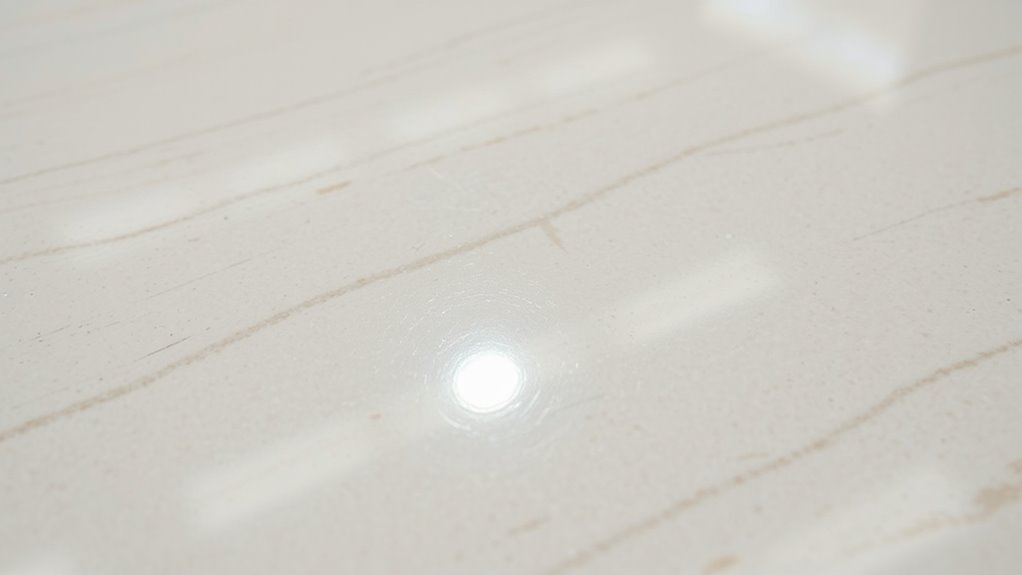
When selecting a top coat for epoxy resin, I weigh gloss versus matte and how each finish affects the overall look. I also evaluate UV protection, scratch resistance, and heat tolerance to keep the epoxy bright and durable. Additionally, I consider drying time ranges to choose a coat that fits the project schedule without rushing results.
Gloss vs Matte
Choosing between gloss and matte coats depends on how you want your epoxy to shine. I prefer gloss for a bright, mirror-like look that enhances colors and details; it reflects more light for that wow factor. Matte finishes diffuse light, yielding a softer, more natural appearance and better hiding tiny scratches and fingerprints.
The level of shine matters: high gloss shows smudges, while matte stays calm and clean longer. Gloss tops are slightly more chemical resistant since their smooth surface resists stains a bit easier. Matte coats stay subtler in bright rooms and reduce glare, making chores and projects feel more comfortable. If you roll it on evenly, you gain extra depth.
UV Protection Levels
UV protection in top coats helps keep epoxy from yellowing when sunlight hits your project. The level of UV resistance comes from the exact formulation, including UV stabilizers. The higher the amount of absorbers and HALS, the better the protection, but nothing lasts forever. Even with strong UV coatings, prolonged sun can fade colors a bit over time.
Matte finishes may have slightly less UV resistance than glossy ones because of texture and light scattering. I try to pick a coat with a clear mix of absorbers and HALS to balance shine and protection. Remember, even the best coat can fade after years of sun, so reapplying is part of the hobby. It’s easy, you can do it.
Scratch Resistance
Scratch resistance matters just as much as UV protection when you pick a top coat. A tough layer keeps your artwork smooth and shiny. Look for hardness ratings and scratch tests, and ask about daily wear from cups, keys, or brushes. Clear coats with ceramic or acrylic particles usually resist scuff marks, while glossy finishes show scratches more.
I prefer mid-range hardness, not too brittle, so it forgives small bumps. Test a small sample, then compare gloss, feel, and how easy it is to recoat. Keep your workspace tidy, use clean brushes, and avoid shortcuts that create micro-scratches. With steady practice, choosing a scratch-resistant top coat becomes a straightforward, satisfying part of the hobby.
Heat Tolerance
Heat tolerance matters more than you think, since sunlit days can fade finishes. When I pick a top coat, I look for heat resistance that lasts. Higher quality coatings can withstand around 200°F, which helps protect your epoxy. The exact strength depends on the formula, resins, and additives used. If you heat the surface for long, even moderate warmth can cloud or distort it.
UV-resistant coatings also help because they keep the resin from soaking up heat. So choose a finish with good heat tolerance and apply it evenly for best shine. If you notice chalky spots after sun exposure, reapply or seal again after cleaning. Remember safety first, work in shade, and enjoy making durable, bright projects today.
Drying Time Range
Knowing drying time helps me plan projects, since you can’t rush a smooth finish. Top coat drying times usually run from 8 to 24 hours, depending on formulation and environment. If you want a quick finish, some epoxy top coats dry in about 8 or 9 hours. Full curing, when the piece is ready for use, often takes around 24 hours.
Before drying starts, you usually have roughly 15 minutes to spread the coating. If you apply gentle heat with a breeze or a hair dryer, drying can move faster, but speeding up drying might slightly change the finish. I plan around the 24-hour mark so I can sand later. If the weather is humid or cool, expect the longer end of the range. Plan for longer cure times, not rushes.
Surface Compatibility
Now that drying times are covered, consider surface compatibility. When choosing a top coat, think about the surface it will cover. Coatings designed for countertops often work well on large horizontal epoxy areas, but small items may not receive even coverage. Some top coats are formulated to bond with the underlying epoxy, which helps prevent peeling or clouding.
Consider the piece’s intended use, since high-traffic or high-wear areas require scratch- and impact-resistant formulas. Porous surfaces like wood benefit from sealers that minimize absorption, so choose products with strong sealing properties. Finally, match the finish to your epoxy base coat, because a matte or glossy look can affect adhesion and the final shine. That will keep your project looking great.
Food Safety Standards
To keep epoxy projects food-safe, I verify the coating’s compliance with relevant standards. Food safety rules like 21 CFR 175.300 limit how much chemical can migrate into food, and I look for coatings that meet those limits. I also check for ASTM D-4236 certification, which indicates the product has been tested for potential health effects when it cures properly.
It helps if the top coat uses food-grade ingredients, making it safer for cutting boards and pastry surfaces. However, a food-safe label doesn’t guarantee safety with every food, since temperature and contact time matter. So I test small pieces first and monitor cooking heat and storage conditions. This careful approach keeps meals safe and your hobby enjoyable.
Frequently Asked Questions
How Does UV Light Affect Long-Term Gloss Retention?
Ultraviolet light can gradually diminish gloss over time due to photo-oxidation, particularly with unprotected epoxy; blue-rich UV wavelengths are more damaging. Apply UV-stable top coats or UV-blocking formulations to preserve shine. Reapply periodically for lasting durability.
Is It Compatible With Pigmented Epoxy Systems?
Yes, it is compatible with pigmented epoxy systems. First test color stability, apply thin coats, and ensure UV protection. I recommend using a compatible clear sealant; recoat after 4–6 hours and monitor for issues closely.
How Often Should You Recoat for High-Use Surfaces?
For high-use surfaces, recoating every 6 to 12 months is recommended, depending on traffic and wear. If you notice dull spots, scratches, or a loss of gloss, recoat sooner. I’ll guide you through proper prep and application.
Do Top Coats Resist Scratching From Metal Utensils?
Yes, they resist light scratching, but they aren’t scratch-proof; metal utensils can leave marks with enough force. Use soft tools, avoid using sharp metal utensils on hot surfaces, and recoat when you notice dulling or micro-scratches.
Are There Eco-Friendly Options With Comparable Shine?
Yes, eco-friendly options can achieve comparable shine. Look for water-based, low-VOC finishes, such as plant-based polyurethanes or hydrocarbon-free UV-curable coatings, which deliver durable gloss with fewer solvents and are safer for you and the environment.


